
Where Are the Biggest Growth Opportunities for Garden Centres?
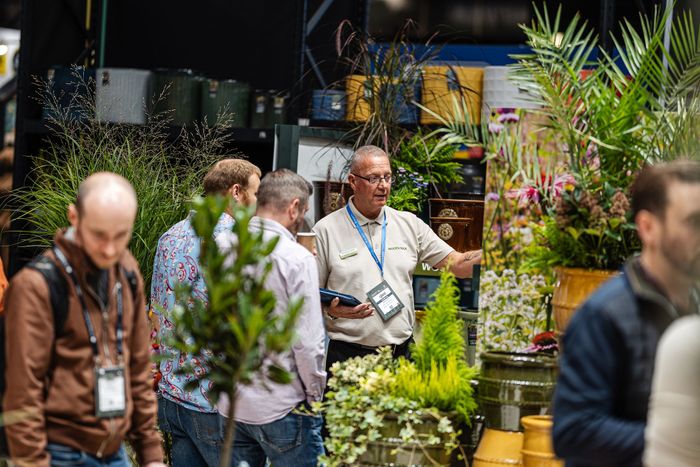
If the garden retail market has felt a bit hard to read lately, you're not alone. At Glee Birmingham 2026, Laura Loveridge, Market Research Manager, and Harry Redman, Market Research Executive, both from the Horticultural Trades Association (HTA), took to Centre Stage to cut through the noise. Here's what they shared, and what it means for garden centres and the garden suppliers who work with them.
How big is the UK garden retail market right now?
The HTA estimates the market is worth around £9 billion a year, roughly £310 per household. Garden centres are still the main channel with about a third of all spend, and the internet is now second at around a fifth. Harry pointed out that online spend is broadly stable across every age group, so it's no longer something you can file under "younger shoppers".
The UK's 1,300 or so garden centres turn over close to £4 billion, but it's a consolidating market, which means extra pressure on the independents that remain.
Who is actually spending the money?

The HTA splits UK households into nine segments. The biggest spenders are the Garden Proud, mid to late career professionals with big houses and big gardens who mainly use their outdoor space for entertaining and socialising.
They make up 20% of UK adults but 28% of all garden retail spend, and they visit garden centres around five times a year. Quality matters most to them, and they alone account for 30% of seeds and bulbs spend and 29% of outdoor containers. That makes them a useful steer for anyone weighing up premium ranges or reviewing their pots and planters.
Why is food the standout category for garden centres?

If one chart got people talking, it was catering. Since 2022, garden centre catering sales have grown 43%, or around 25% once inflation is stripped out. As Harry put it, "not all garden centres have space for catering, but those that do, it's been very profitable for them."
Outdoor plants, by contrast, are flat in real terms, while outdoor furniture and barbecues have been sluggish since the pandemic buying spree. Because replacement cycles all synced up in 2021 and 2022, Harry expects an uptick in the next couple of years, worth bearing in mind when planning outdoor living ranges.
In 2025, the split between gardening and non-gardening products was roughly 50/50, with catering's share of turnover rising from 13% to 14% since 2023 while plants, seeds and bulbs slipped from 28% to 26%. Laura said this shows "garden centres are really becoming that sort of wider destination for retail, not just the core gardening categories that we've spoken about."
That momentum is holding, with the HTA reporting café and restaurant sales up 8% in February 2026. Our piece on maximising success with cafés and food retail is a good place to start if you're growing your own offer, and Glee's Food Hall bring together the brands to stock it.
What's holding shoppers back?

Consumer confidence has been stable but low for around five years, and the gap between pay growth and inflation is narrowing.
Demographics cut both ways too. An ageing population means more core gardeners, and 65 to 74 year olds make up 10% of the population but 22% of garden retail spend. The catch is money, with Pensions UK figures showing only 23% of people are on track for a moderate retirement and just 9% for a comfortable one. Home ownership matters as well, as among 16 to 24 year olds, 88% of homeowners were active in the garden market compared with 59% of renters.
Where are the biggest opportunities for garden centres?
Health and wellbeing came up again and again. For older customers, a long-running Australian study linked daily gardening with a 36% lower risk of dementia, and garden centres can be genuine social spaces at a time when loneliness is rising, which plays straight into the idea of garden centres as experiences rather than just shops.
Sustainability is the other big one. According to HTA research, 80% of UK adults think garden centres ought to be sustainable and 50% believe they already are. Harry described this as a blessing and a curse, because "consumers are going to garden centres with the expectation that they will be operating in a sustainable and environmental way", so any slip is more likely to be noticed.
Then there's the climate. July 2026 was England's driest July on record, and volatile weather is here to stay. That creates demand for drought-tolerant plants, water butts and permeable surfaces, so it's worth talking to your wholesale plants and garden product suppliers about how ranges can keep up.
How is AI changing the way shoppers find garden centres?

Harry's advice was that "your website actually only has a very small impact on whether you're being found online", with reviews and coverage in trade and local media doing much of the heavy lifting.
What should garden centres focus on next?
Laura's closing message was to stay agile. As she put it, "it's really about recognising where those gaps are and where we can add value rather than competing with the disruptors." The standout opportunities are health and wellness, climate adaptation and "that sort of experiential retail which is so unique to garden centres compared to other retailers."
If you like what you've seen here, why not join us in-person for the retail event of the season? Glee runs from 6-8 September 2027 at the NEC, Birmingham. Register your interest here, and join our newsletter for the latest updates before the show.